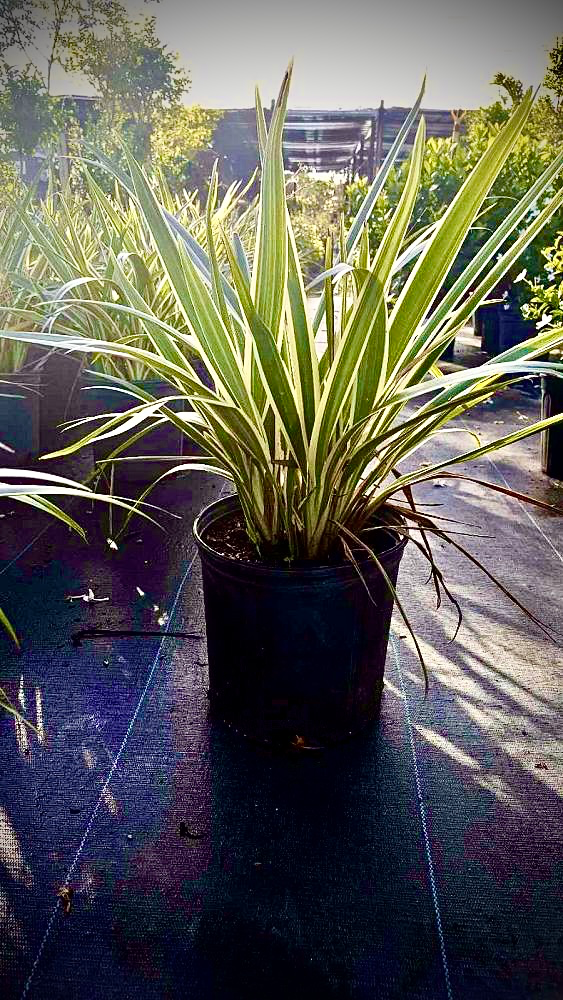
Variegated Flax Lily (Dianella tasmanica 'Variegata')
This plant can become part of your Family Tree. Earn Pollen with your purchase, follow your plants’ timeline in your account, and use eligible Pollen toward future orders. How Pollen & Family Tree work →
We upload photos of the actual plants selected for you to your order before they ship. You'll have the opportunity to see exactly what is being prepared.
Email hello@inchbyyard.com, call or text (954) 289-5848, or use the website chat. We respond within two business days.
Plants shipped by carrier are covered by our 48-hour National Live Plant Arrival Policy. Report arrival damage within 48 hours with photos; approved claims qualify for a replacement or refund. Plants delivered and installed by Inch by Yard have a separate 30-day Thrive Guarantee. Read the full Returns Policy.
Binomial name
Dianella tasmanica
Common names
Tasmanian Flax Lily, Blue Flax Lily, Bluebell Lily
Description
Dianella tasmanica is a stunning evergreen perennial known for its elegant blue-purple flowers that bloom in spring and summer, followed by vibrant blue berries. Its narrow, arching leaves resemble flax, giving it a graceful, flowing appearance. The plant forms neat clumps that work well in borders, ground covers, or containers, and it’s perfect for adding texture and color to your garden. Native to Australia, the Tasmanian Flax Lily is a low-maintenance plant that adds a tropical touch with its colorful blooms and attractive foliage.
Light requirements
This plant thrives in full sun to partial shade. In full sun, it will produce the most flowers, but it also tolerates some shade, making it versatile for a variety of garden conditions. If planting in areas with partial shade, it may bloom less but will still provide beautiful foliage.
Soil preferences, including pH and drainage
Dianella tasmanica prefers well-draining soil that’s slightly acidic to neutral (pH 6.0–7.0). It’s adaptable to a range of soil types, including sandy or loamy soils. The plant enjoys fertile, moist soil but is drought-tolerant once established. Be sure the soil drains well to prevent root rot, as it doesn’t like soggy feet.
Water needs
Water regularly during the growing season to keep the soil moist but not waterlogged. Once established, Dianella tasmanica is quite drought-tolerant and will need less frequent watering. However, during extended dry spells, it will benefit from occasional deep watering. In cooler months, water less frequently as the plant enters a dormant phase.
| Size: 3 Gallon |