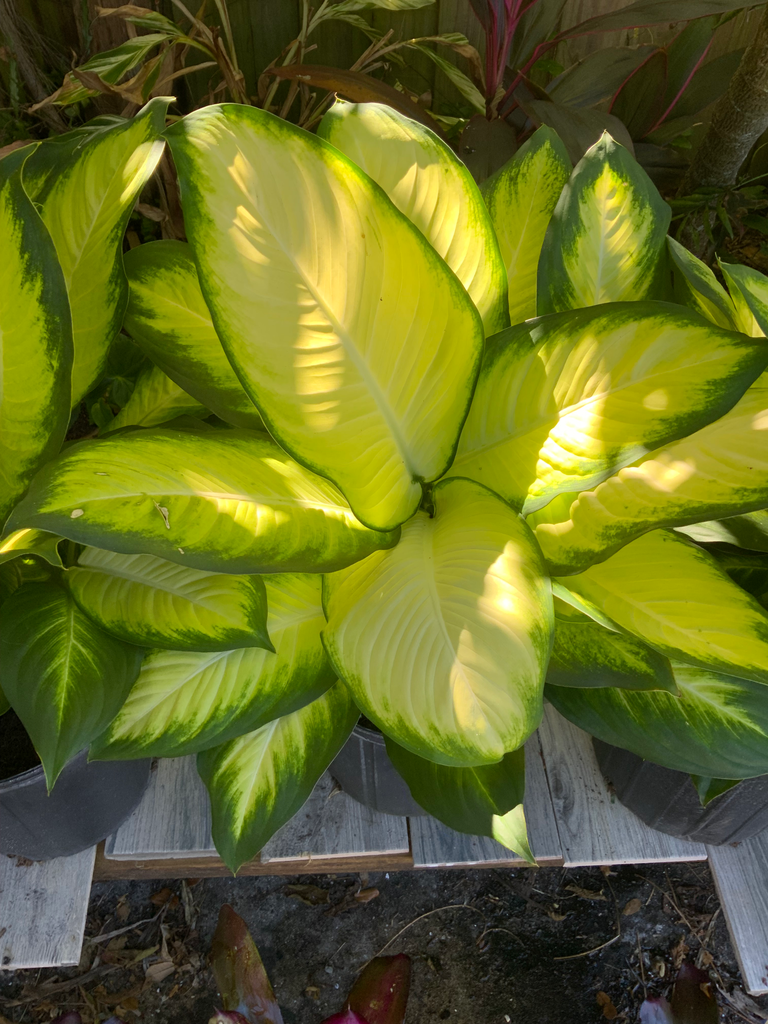
Dieffenbachia (Dumb Cane)
This plant can become part of your Family Tree. Earn Pollen with your purchase, follow your plants’ timeline in your account, and use eligible Pollen toward future orders. How Pollen & Family Tree work →
We upload photos of the actual plants selected for you to your order before they ship. You'll have the opportunity to see exactly what is being prepared.
Email hello@inchbyyard.com, call or text (954) 289-5848, or use the website chat. We respond within two business days.
Plants shipped by carrier are covered by our 48-hour National Live Plant Arrival Policy. Report arrival damage within 48 hours with photos; approved claims qualify for a replacement or refund. Plants delivered and installed by Inch by Yard have a separate 30-day Thrive Guarantee. Read the full Returns Policy.
Binomial name
Dieffenbachia
Common names
Dumb Cane, Leopard Lily, Exotica
Description
Dieffenbachia is a popular, easy-to-care-for houseplant known for its large, striking leaves that are typically marked with white or cream-colored patterns against a deep green background. It’s a tropical plant that brings a lush, jungle-like feel to any room. While Dieffenbachia is admired for its bold foliage, it also gets its nickname, "Dumb Cane," from the toxic sap it produces, which can cause a temporary loss of speech if ingested. Despite this, it’s still a favored choice for homes and offices due to its ornamental appeal and low maintenance.
Light requirements
This plant prefers bright, indirect light, though it can adapt to lower light levels. Direct sunlight may scorch its leaves, causing unsightly brown spots, so it’s best to keep it out of the direct sun. In lower light, the plant will still grow, but its leaves may not be as vibrant, and growth may slow.
Soil preferences, including pH and drainage
Dieffenbachia prefers well-draining, fertile soil with a slightly acidic to neutral pH (6.0–7.0). A peat-based potting mix works well, but make sure the soil doesn’t retain too much moisture. Good drainage is crucial to prevent root rot, especially if the plant is kept in a container.
Water needs
Water Dieffenbachia when the top inch of soil feels dry to the touch. Be sure to water deeply, allowing excess water to drain away. During the winter months, reduce watering since the plant’s growth slows down. It’s better to underwater than overwater, as this plant is sensitive to root rot from excessive moisture.