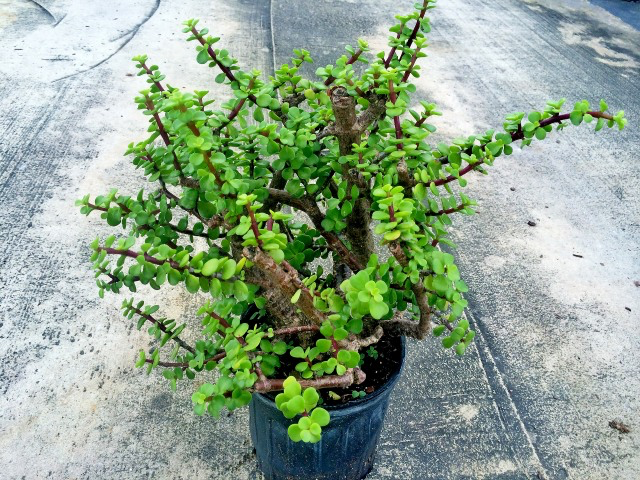
Elephant Bush
This plant can become part of your Family Tree. Earn Pollen with your purchase, follow your plants’ timeline in your account, and use eligible Pollen toward future orders. How Pollen & Family Tree work →
We upload photos of the actual plants selected for you to your order before they ship. You'll have the opportunity to see exactly what is being prepared.
Email hello@inchbyyard.com, call or text (954) 289-5848, or use the website chat. We respond within two business days.
Plants shipped by carrier are covered by our 48-hour National Live Plant Arrival Policy. Report arrival damage within 48 hours with photos; approved claims qualify for a replacement or refund. Plants delivered and installed by Inch by Yard have a separate 30-day Thrive Guarantee. Read the full Returns Policy.
Binomial name
Portulacaria afra
Common names
Elephant Bush, Dwarf Jade Plant, Spekboom
Description
Portulacaria afra is a hardy, drought-tolerant succulent known for its small, round, fleshy green leaves and reddish-brown stems. Often mistaken for a jade plant, it’s an excellent choice for bonsai enthusiasts, container gardening, or as a ground cover in arid landscapes. Native to South Africa, this versatile plant is prized for its ability to thrive in challenging conditions, making it perfect for beginners and seasoned gardeners alike. It’s also an eco-friendly superstar, known for its exceptional carbon-sequestration abilities, contributing to cleaner air.
Light requirements
This plant thrives in bright, indirect light to full sun. Outdoors, it can tolerate intense sunlight, but some shade during the hottest parts of the day may prevent leaf scorch. Indoors, place it near a sunny window for the best growth.
Soil preferences, including pH and drainage
Portulacaria afra prefers well-draining soil with a slightly acidic to neutral pH (5.5–7.0). A cactus or succulent mix is ideal. Avoid heavy, clay-based soils, as these can hold too much moisture and lead to root rot.
Water needs
Water sparingly, allowing the soil to dry out completely between waterings. During active growth in warmer months, water thoroughly but infrequently. In cooler months, reduce watering even further, as the plant can store moisture in its leaves. Overwatering is a common issue, so it’s better to underwater than overdo it.