
Foxtail Fern
This plant can become part of your Family Tree. Earn Pollen with your purchase, follow your plants’ timeline in your account, and use eligible Pollen toward future orders. How Pollen & Family Tree work →
We upload photos of the actual plants selected for you to your order before they ship. You'll have the opportunity to see exactly what is being prepared.
Email hello@inchbyyard.com, call or text (954) 289-5848, or use the website chat. We respond within two business days.
Plants shipped by carrier are covered by our 48-hour National Live Plant Arrival Policy. Report arrival damage within 48 hours with photos; approved claims qualify for a replacement or refund. Plants delivered and installed by Inch by Yard have a separate 30-day Thrive Guarantee. Read the full Returns Policy.
Binomial name
Asparagus densiflorus
Common names
Sprenger’s Asparagus Fern, Emerald Fern, Foxtail Fern
Description
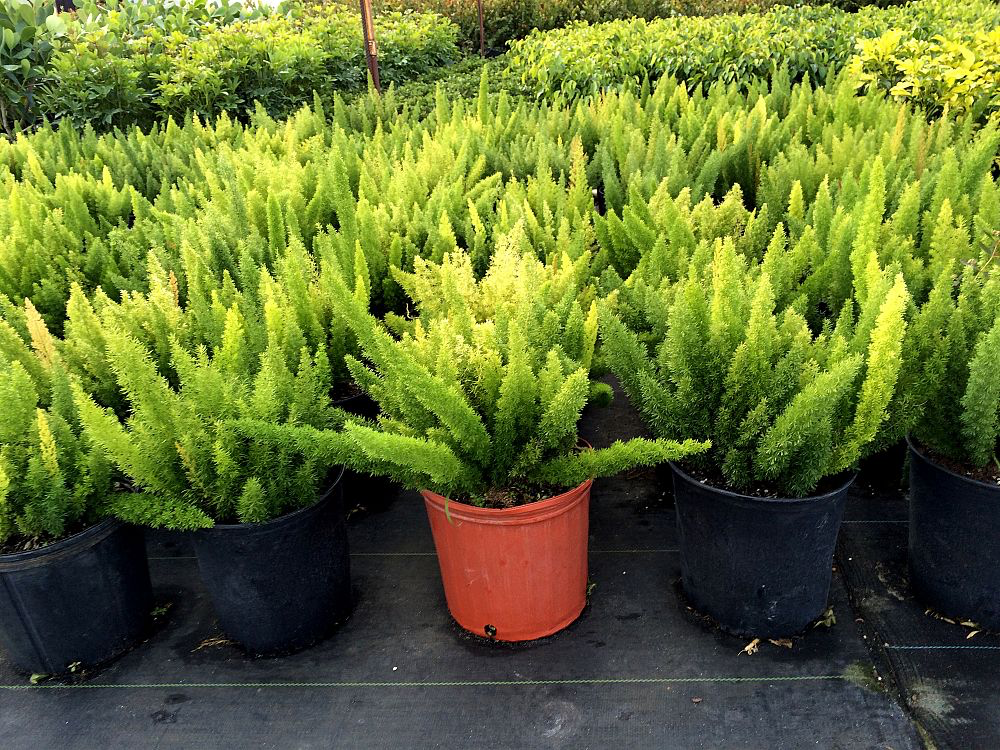
Asparagus densiflorus is a lush, arching perennial that brings a soft, feathery look to any space. With its dense, fern-like fronds that resemble soft green needles, it’s often used in hanging baskets, containers, or as ground cover in tropical and subtropical gardens. Despite being called a “fern,” it’s actually a member of the lily family. This easy-to-grow plant can also produce small white flowers followed by bright red berries, adding seasonal interest. Asparagus densiflorus is a great option for adding texture to a garden or indoor space with minimal fuss.
Light requirements
This plant prefers bright, indirect light but can also tolerate some direct sunlight, especially in cooler climates. In areas with intense sun, too much direct light may scorch the fronds. For best results, place it in a spot that gets filtered sunlight or morning sun with some afternoon shade.
Soil preferences, including pH and drainage
Asparagus densiflorus thrives in well-draining, loamy soil with a slightly acidic to neutral pH (6.0–7.0). It prefers soil that retains some moisture but isn’t soggy, so good drainage is key to preventing root rot. Whether in a container or ground planting, ensure the soil doesn’t stay waterlogged to keep the plant healthy.
Water needs
Water regularly, allowing the top inch of soil to dry out between waterings. While it likes consistent moisture, it’s also tolerant of periods of drought once established. During winter, reduce watering as the plant’s growth slows down. Ensure the plant isn’t overwatered, as this can lead to root rot, especially in cooler, dimmer conditions.
| Size: 3 Gallon |