


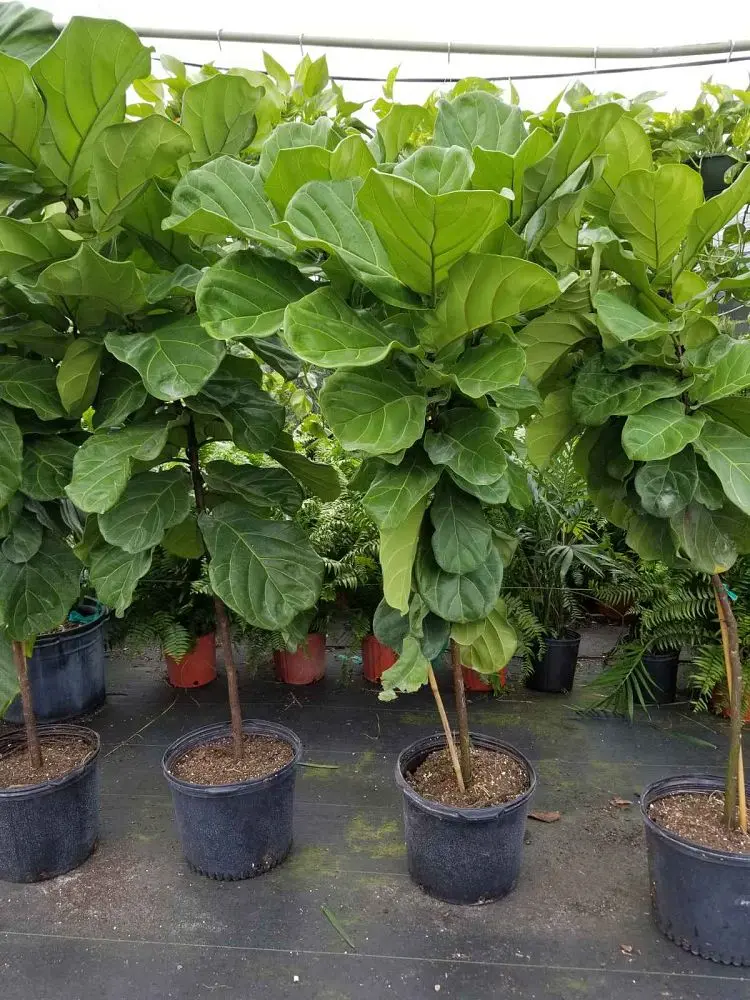
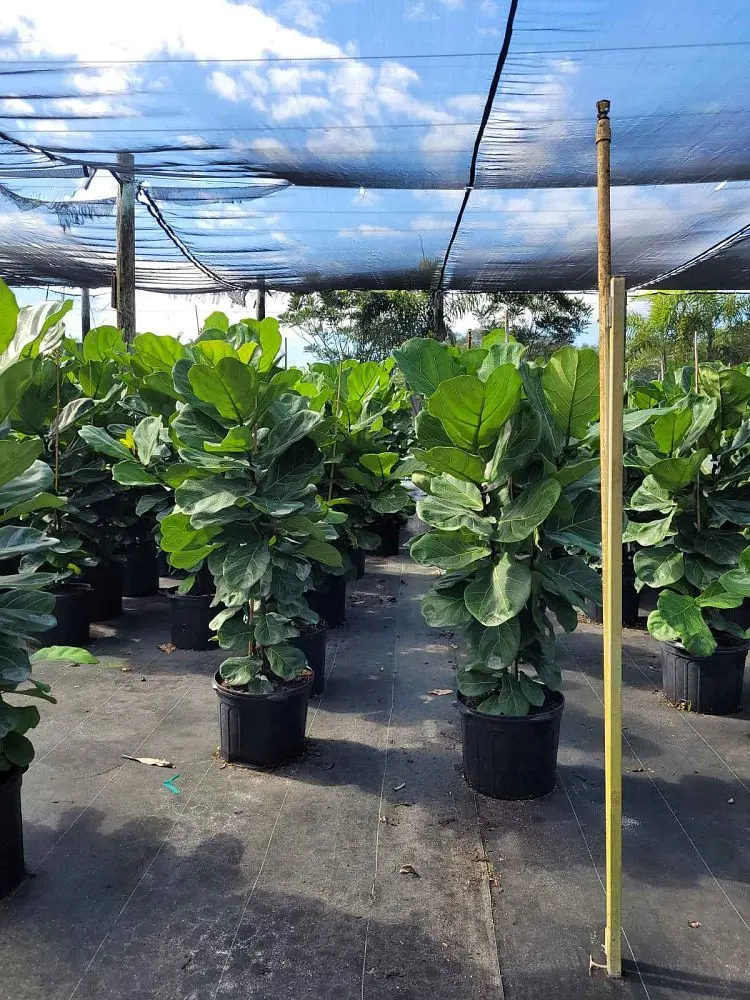
Fiddle Leaf Fig
This plant can become part of your Family Tree. Earn Pollen with your purchase, follow your plants’ timeline in your account, and use eligible Pollen toward future orders. How Pollen & Family Tree work →
We upload photos of the actual plants selected for you to your order before they ship. You'll have the opportunity to see exactly what is being prepared.
Email hello@inchbyyard.com, call or text (954) 289-5848, or use the website chat. We respond within two business days.
Plants shipped by carrier are covered by our 48-hour National Live Plant Arrival Policy. Report arrival damage within 48 hours with photos; approved claims qualify for a replacement or refund. Plants delivered and installed by Inch by Yard have a separate 30-day Thrive Guarantee. Read the full Returns Policy.
Binomial name
Ficus lyrata
Common names
Fiddle Leaf Fig, Fiddle Leaf Tree, Banana Fig
Description
Ficus lyrata is a bold, statement-making plant with large, glossy, violin-shaped leaves that have made it a favorite in both modern homes and office spaces. Known for its tropical look, the Fiddle Leaf Fig can grow into a small tree indoors, adding height and drama to your décor. Native to West Africa, it thrives in bright conditions and can become a striking focal point in any room. While it may require a little more attention compared to other houseplants, its lush green leaves and impressive growth make it well worth the effort.
Light requirements
Fiddle Leaf Figs love bright, indirect light and will thrive in spaces with plenty of natural sunlight. Too little light can cause the plant to become leggy and slow its growth. Direct sunlight is fine for short periods but should be filtered, as too much can lead to leaf burn.
Soil preferences, including pH and drainage
This plant prefers well-draining soil that’s rich in organic matter with a slightly acidic to neutral pH (6.0–7.0). A good potting mix with added perlite or sand will help improve drainage. Ensuring the pot has drainage holes is crucial to prevent water from accumulating at the bottom and causing root rot.
Water needs
Water your Ficus lyrata when the top inch of soil feels dry. It’s important to thoroughly water the plant and allow excess water to drain out of the bottom. During the winter months, when the plant is less active, reduce watering slightly, but never let the soil stay too dry for long periods.
| Size: 7 Gallon |